Women’s traditional clothing
Looking for men’s traditional clothing? Jump directly to Men’s traditional clothing ↓.
Women’s traditional clothing in Mexico blends ancient indigenous textile traditions with colonial and regional styles:
- Huipil: a sleeveless tunic woven on backstrap looms from cotton or wool, worn by indigenous women in Oaxaca, Chiapas, Yucatán, and Guerrero. Each huipil is adorned with embroidered geometric and floral motifs that convey the wearer’s community, history, and marital status.
- Rebozo: a versatile, long woven shawl with intricate hand-knotted fringe (rapacejo). Made of cotton, wool, or silk, the rebozo is draped over the head and shoulders, used for warmth, and practically deployed for carrying infants or marketplace goods.
- China poblana: the legendary national costume associated with Puebla, consisting of a white blouse embroidered with silk and beads, a full green-and-red skirt embellished with sequins depicting the Mexican eagle, and a crossed rebozo.
- Tehuana dress: the iconic dress of Zapotec women on the Isthmus of Tehuantepec (Oaxaca), featuring a dark velvet huipil embroidered with vivid flowers, a long skirt finished with a crisp white starched lace ruffle (holán), and gold jewellery—famously worn by artist Frida Kahlo.
- Hipil and Terno: Maya women in Yucatán wear the knee-length white cotton hipil, decorated with colourful cross-stitch embroidery around the square neck and hem, and the three-piece terno for festive occasions.
Men’s traditional clothing
Looking for women’s traditional clothing? Jump to Women’s traditional clothing ↑.
Traditional men’s attire in Mexico reflects the nation’s equestrian culture, regional craftsmanship, and colonial weaving heritage:
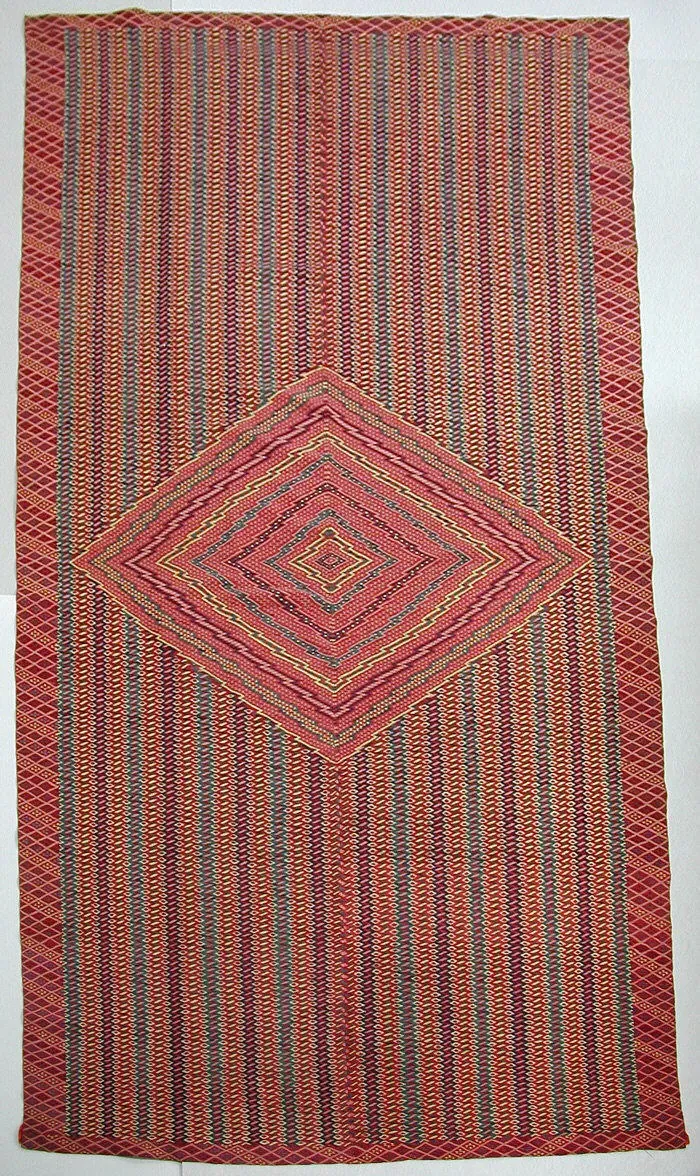
- Sarape: the renowned rectangular woven wool blanket-shawl with a central neck slit or draped across one shoulder. Originating in Saltillo, Coahuila, the finest sarapes are celebrated for fine stripes and an intricate central diamond medallion. Read more on our sarape page.
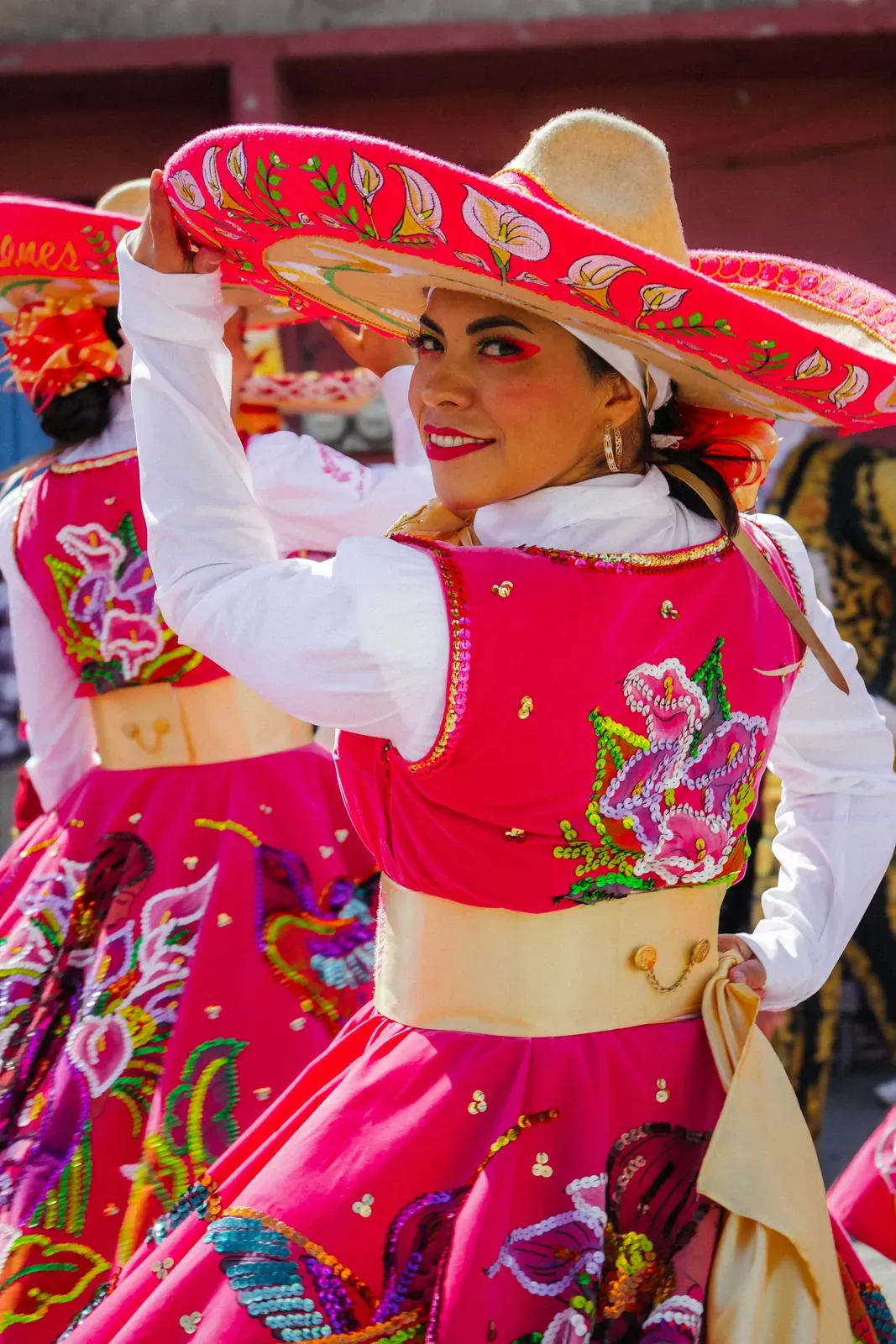
- Traje de charro: the distinguished equestrian suit of Mexican horsemen (charros), featuring tightly tailored trousers with silver or bone button accents (botonadura) down the outseams, a cropped jacket, a silk neck bow (moño), and a wide-brimmed felt sombrero.
- Guayabera: a lightweight linen or cotton shirt with vertical pleats (alforzas) and four front pockets, worn untucked in Yucatán, Veracruz, and coastal areas as formal and festive menswear.
- Indigenous men’s dress: in highland indigenous communities, men wear loose white cotton shirts and trousers (calzón de manta), woven palm hats, leather sandals (huaraches), and colourful woven sashes (fajas).
Regional variety
- Isthmus of Tehuantepec (Oaxaca): Zapotec women wear the Tehuana dress, a short huipil, often of velvet, embroidered with large flowers, with a long skirt finished in a white ruffle and, for festivals, gold jewellery. The painter Frida Kahlo often wore it.
- Yucatán: Maya women wear the hipil, a white cotton dress embroidered with flowers around the neck and hem; its festive version is the terno. Many men wear the guayabera, a light shirt with pleats and pockets.
- Chiapas: the highland Maya communities are known for dress that differs from village to village, from embroidered blouses to woollen skirts.
Wedding attire
Most Mexican couples today marry in a white wedding dress and a suit, but many customs shape the ceremony. At Catholic weddings, sponsors (padrinos) often place a lazo, a large loop of rosary beads, cord or flowers, around the shoulders of the couple as a sign of their union. In many ceremonies the groom also gives the bride thirteen coins (arras).
In Yucatán and other hot coastal areas, grooms and male guests often wear a white guayabera, and some brides choose a dress inspired by the hipil. Some grooms wear a charro suit, and in many indigenous communities brides wear their community’s festive dress.
Festivals and dance
- Independence Day (16 September, celebrated from the night before): many people wear china poblana and charro outfits or clothes in the national colours.
- Guelaguetza in Oaxaca City, held in July: groups from the regions of Oaxaca dance in their own traditional dress.
- Folklórico dance (baile folklórico): stage costumes based on regional dress, such as the wide ribboned skirts of Jalisco, worn with a charro suit for the jarabe tapatío. The Ballet Folklórico de México, founded by Amalia Hernández in 1952, made these costumes widely known.
Traditional clothing today
In parts of Oaxaca, Chiapas, Yucatán, Guerrero and other states, many indigenous women still wear the huipil and other community dress every day. Elsewhere, traditional garments are kept for festivals, dance and family celebrations, and embroidered blouses and dresses are also popular in everyday fashion.
Indigenous communities and the Mexican government have criticised international fashion brands for copying indigenous designs without credit or permission, and a federal law passed in 2022 aims to protect the cultural heritage of indigenous and Afro-Mexican communities, including their textile designs.