Women’s traditional clothing
Looking for men’s traditional clothing? Jump directly to Men’s traditional clothing ↓.
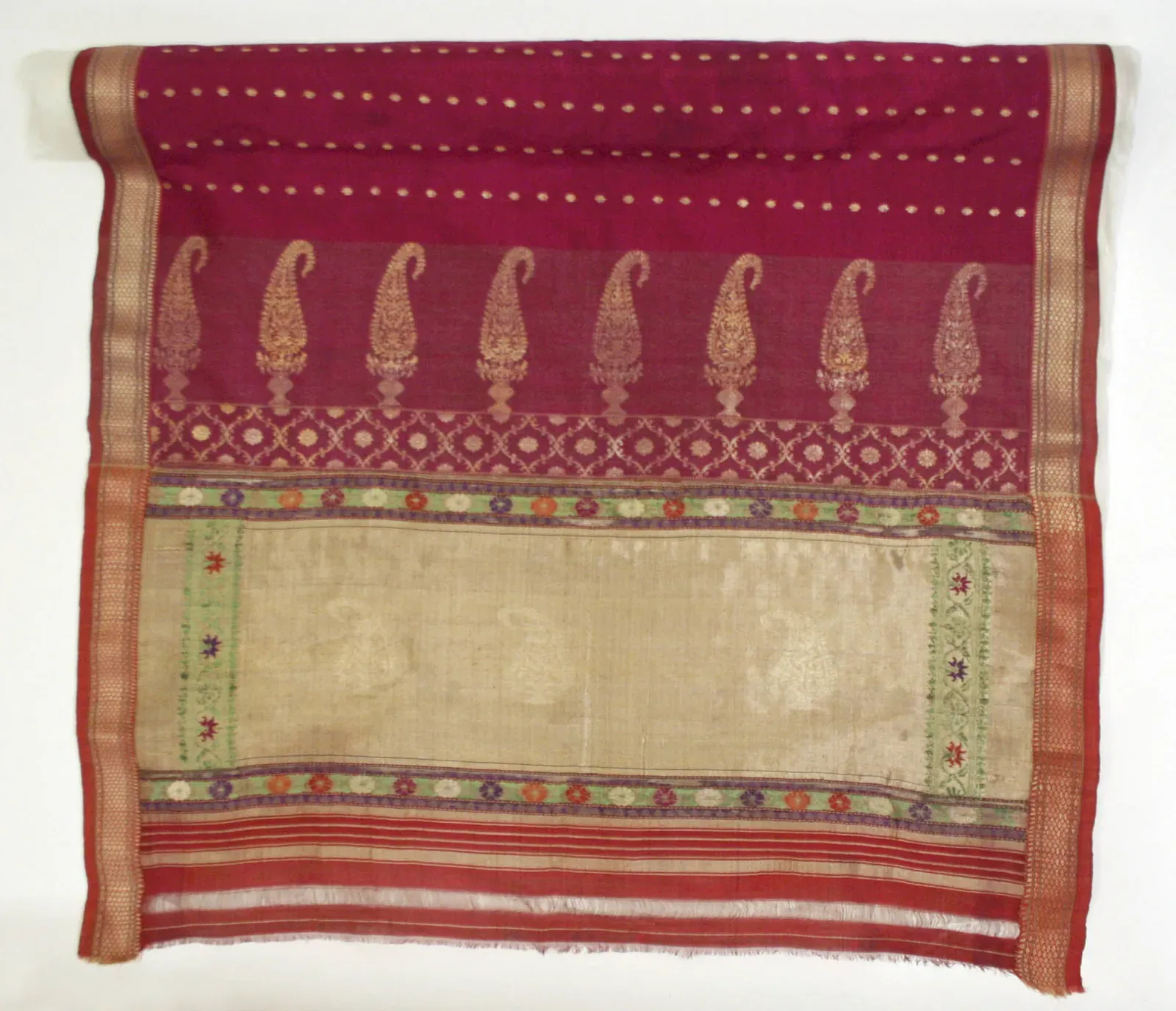
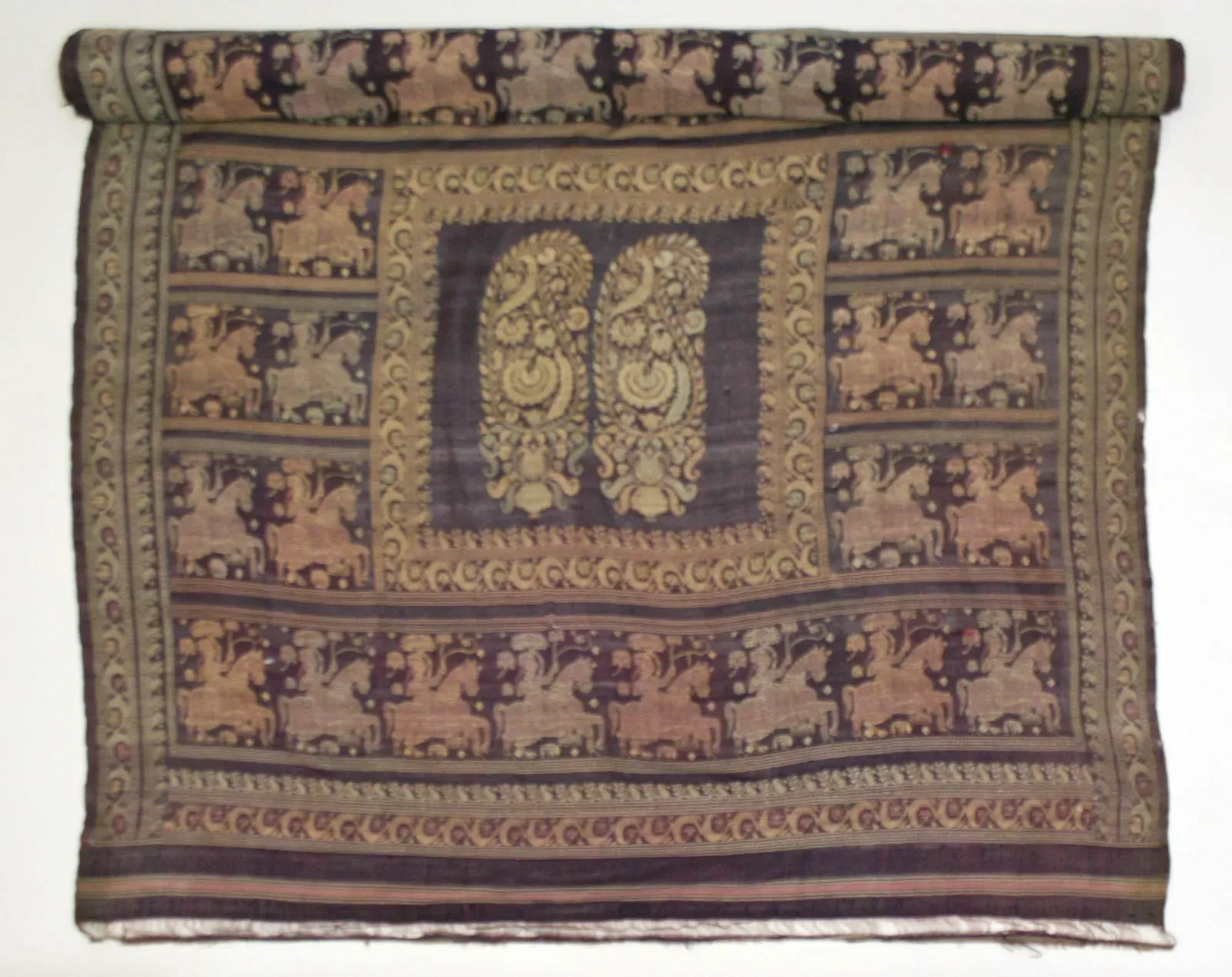
The sari is the foremost traditional garment for women in India, with a recorded heritage stretching back thousands of years. It consists of an unstitched rectangular length of cloth, typically five to nine yards (4.5 to 8 metres) long, draped gracefully around the waist and over the shoulder. It is worn over a fitted cropped blouse (choli) and an ankle-length petticoat into which the pleats are tucked. The most widespread drape today is the nivi style, with pleats gathered neatly at the front and the decorated border (pallu) draped across the torso over the left shoulder. Renowned regional varieties include Banarasi brocades with gold zari from Varanasi, heavy Kanchipuram silks with contrast borders from Tamil Nadu, and nine-yard nauvari saris draped between the legs in Maharashtra. Read more on our sari page.
Indian women also wear other classic traditional ensembles:
- Salwar kameez: a graceful two-piece outfit originating in northern India and the Punjab, consisting of a knee-length tunic (kameez) paired with pleated trousers (salwar) and a light scarf (dupatta).
- Lehenga choli: an opulent floor-length flared skirt (lehenga) worn with a fitted cropped blouse (choli) and an embroidered dupatta, popular for weddings and grand celebrations across northern and western India.
- Chaniya choli: a vibrant, mirror-embroidered skirt and blouse ensemble worn by women in Gujarat and Rajasthan during festive folk dances such as Garba.
- Mekhela chador: the two-piece traditional silk attire of Assamese women, featuring a pleated wrap skirt (mekhela) and draped upper cloth (chador).
Men’s traditional clothing
Looking for women’s traditional clothing? Jump to Women’s traditional clothing ↑.
Traditional men’s clothing in India focuses on unstitched drapes and tailored tunics:
- Dhoti: a long, unstitched rectangular cloth of fine cotton or silk wrapped around the waist and legs, knotted at the waist with pleats tucked in at the back. It is widely worn across north and east India for religious ceremonies, weddings, and formal occasions.
- Veshti and Mundu: in southern India, men wear unstitched waist wraps known as the veshti in Tamil Nadu and the mundu in Kerala, often woven from fine white cotton with distinctive gold-thread borders (kasavu).
- Kurta: a collarless or mandarin-collared knee-length tunic with side slits, worn by men throughout the subcontinent. It is paired with loose cotton trousers (pyjama), tight gathered leggings (churidar), or a dhoti.
- Sherwani: an elegant, structured long coat buttoned down the front, worn over a kurta and churidar. The sherwani is the standard formal wear for grooms and wedding guests throughout northern India, often paired with an embroidered stole and a regal turban (safa or pagri).
- Kediyu: a flared, pleated short top worn with tight chorno trousers and colourful turbans by men in Gujarat during folk festivals.
Regional variety
Handloom weaving gives many regions their own textiles. Well-known examples include:
- Banarasi saris from Varanasi in Uttar Pradesh, woven in silk with brocade patterns in gold or silver thread (zari).
- Kanchipuram silk saris from Tamil Nadu, known for heavy silk and wide borders in contrasting colours.
- Patola from Gujarat, made with the double ikat technique, in which both warp and weft threads are dyed before weaving.
- Kasavu, the off-white cotton cloth with a gold border worn in Kerala, as a sari or as the two-piece mundum neriyathum.
- Mekhela chador from Assam, a two-piece outfit of a wrapped skirt (mekhela) and a draped upper cloth (chador), often woven from local silk.
Dress also differs between religious and Adivasi (Indigenous) communities within the same region, so local custom matters more than any national rule.
Wedding attire
Wedding clothing varies widely by region, community and family. In many parts of northern India, brides wear a red or other deep-coloured lehenga or sari, often heavily embroidered, and red is widely associated with marriage and good fortune. Grooms there often wear a sherwani with a turban.
In South India many brides wear a Kanchipuram or other silk sari, and in Kerala many Hindu brides wear a cream-and-gold kasavu sari. Southern grooms may wear a veshti or mundu. Many Christian brides in India wear a white sari or a white gown, and Muslim brides in some regions wear a lehenga or the wide-legged sharara or gharara. Before many weddings, the bride’s hands and feet are decorated with henna (mehndi).
Festivals and celebrations
New or special clothes are part of many celebrations:
- Diwali: many families buy and wear new clothes, such as saris, kurtas or lehengas.
- Navratri: in Gujarat, women dancing the garba often wear the chaniya choli, an embroidered skirt and blouse that may be decorated with small mirrors. Men may wear the kediyu, a short, flared top.
- Durga Puja: in West Bengal, many women wear a white sari with a red border, especially on the last day of the festival.
- Onam: in Kerala, the kasavu sari and mundu are widely worn.
- Eid: families often dress in new clothes, such as kurtas, salwar kameez or sherwanis.
Traditional clothing today
In cities, many people wear Western clothes to work or school, but the sari and the salwar kameez are still everyday wear for many women, and kurtas are popular with men and women alike. India marks National Handloom Day on 7 August to promote handwoven textiles, and many designers reinterpret regional weaves and silhouettes for modern wear.