History
The Mandarin name qipao (旗袍) means “banner gown”. It refers to the qiren, or “banner people”, as the Manchus and others enrolled in the Eight Banners of the Qing dynasty (1644–1912) were known. Manchu women of that time wore long, loose robes that hung straight from the shoulders. The Cantonese name cheongsam (長衫) means “long garment” and is widely used in Hong Kong and in English. In Cantonese it can also refer to a man’s long gown.
The qipao as it is known today appeared in the 1920s in Shanghai and other cities of Republican China. Early versions were fairly loose and long. According to some historians, they were partly inspired by the men’s long robe (changpao), which some women adopted as a sign of modern, educated style. In the late 1920s and 1930s, tailors took up techniques from Western dressmaking, and the qipao became more closely fitted, with shorter sleeves or none at all, and with hems and slits that rose and fell with fashion. Students, office workers, film stars and society women all wore it, and it appeared widely on advertising posters.
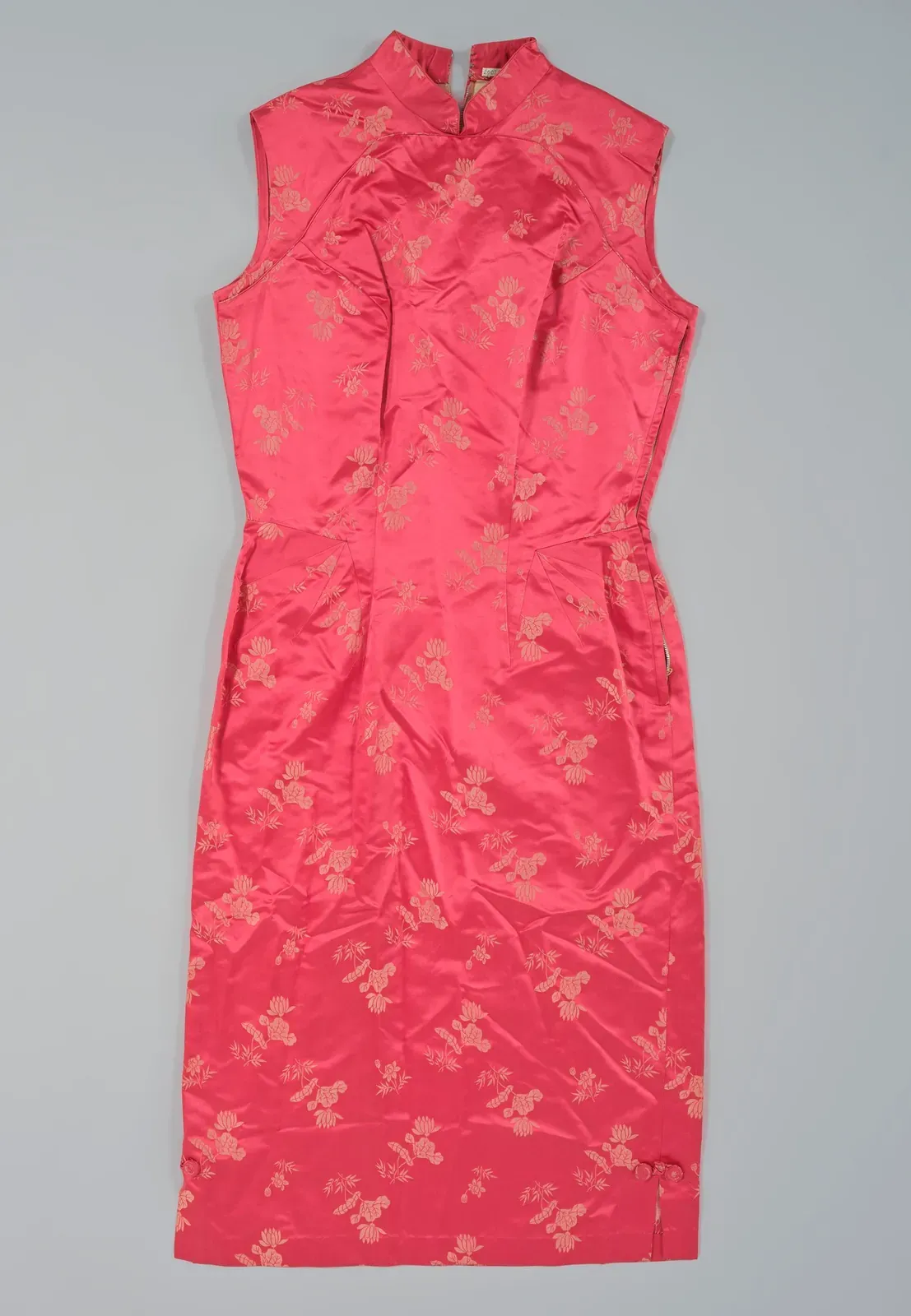
After 1949 the qipao largely disappeared from everyday wear in mainland China, while tailors who had moved to Hong Kong and Taiwan kept the craft going. In the 1950s and 1960s it was everyday and working dress for many women in Hong Kong; the dress in the photo above dates from this period. Since the late 20th century it has returned in mainland China as formal and festive wear.
Features and styles
Most qipao share a few features:
- A mandarin collar, a stiff standing collar that sits close to the neck.
- A front opening that runs from the collar diagonally to the right underarm and then down the right side.
- Frog buttons (pankou), knotted fabric fastenings, often shaped into flowers or other motifs. Many modern qipao also have a hidden zip.
- Side slits, which make walking easier in a close-fitting dress.
- Contrasting piping along the edges of the collar, the opening and the hem.
The main variations are in length (from the ankle to above the knee), sleeves (long, elbow-length, short, cap or none) and fabric, from everyday cotton to silk brocade and velvet for formal wear. People sometimes distinguish a Shanghai style (haipai), more fitted and open to Western influence, from a Beijing style (jingpai), looser and with more traditional decoration such as wide embroidered borders.
How it is worn
Because a classic qipao is close-fitting and made of fabric with little stretch, it is traditionally tailored to the wearer’s measurements. Ready-made versions are widely available today, often in fabrics with some stretch and with a zip, which makes them easier to put on.
The dress is fastened from the collar downwards, with the frog buttons done up one by one along the diagonal opening and the side. It is usually worn with closed shoes or heels, and with a jacket, cardigan or shawl in cooler weather. For formal occasions it is often paired with simple jewellery such as pearl or jade earrings.
When it is worn today
- Weddings: many brides wear a red qipao for the tea ceremony or the banquet, and mothers and guests may choose one as well. See traditional clothing in China for other bridal dress such as the qun kwa.
- Lunar New Year and family celebrations, often in red or other festive colours.
- Formal events, galas and receptions, where it serves as Chinese evening wear.
- Uniforms in some hotels and restaurants, and at a few schools in Hong Kong.
- Stage performances, film and photography, where it often stands for the style of 1930s Shanghai or 1960s Hong Kong.
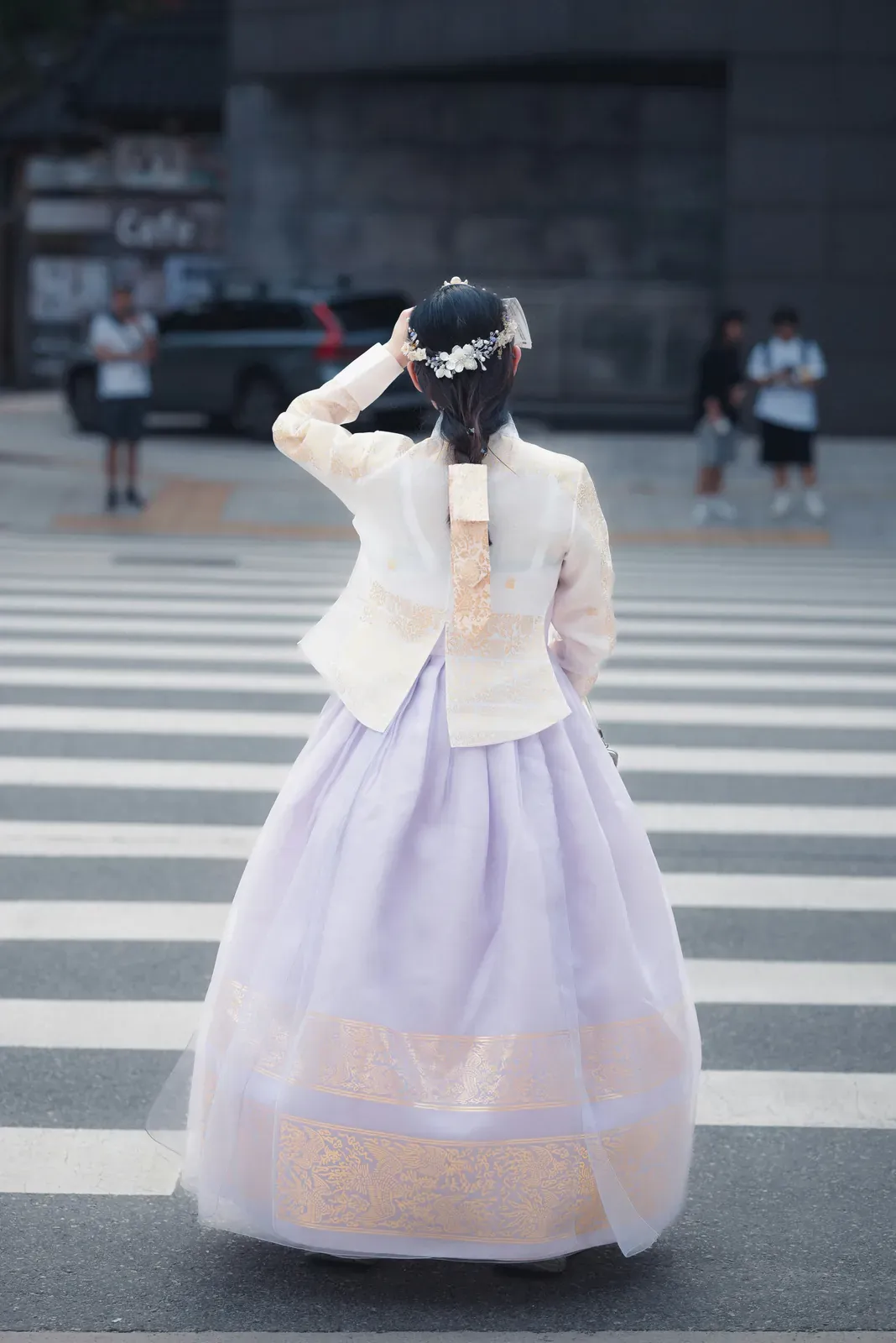
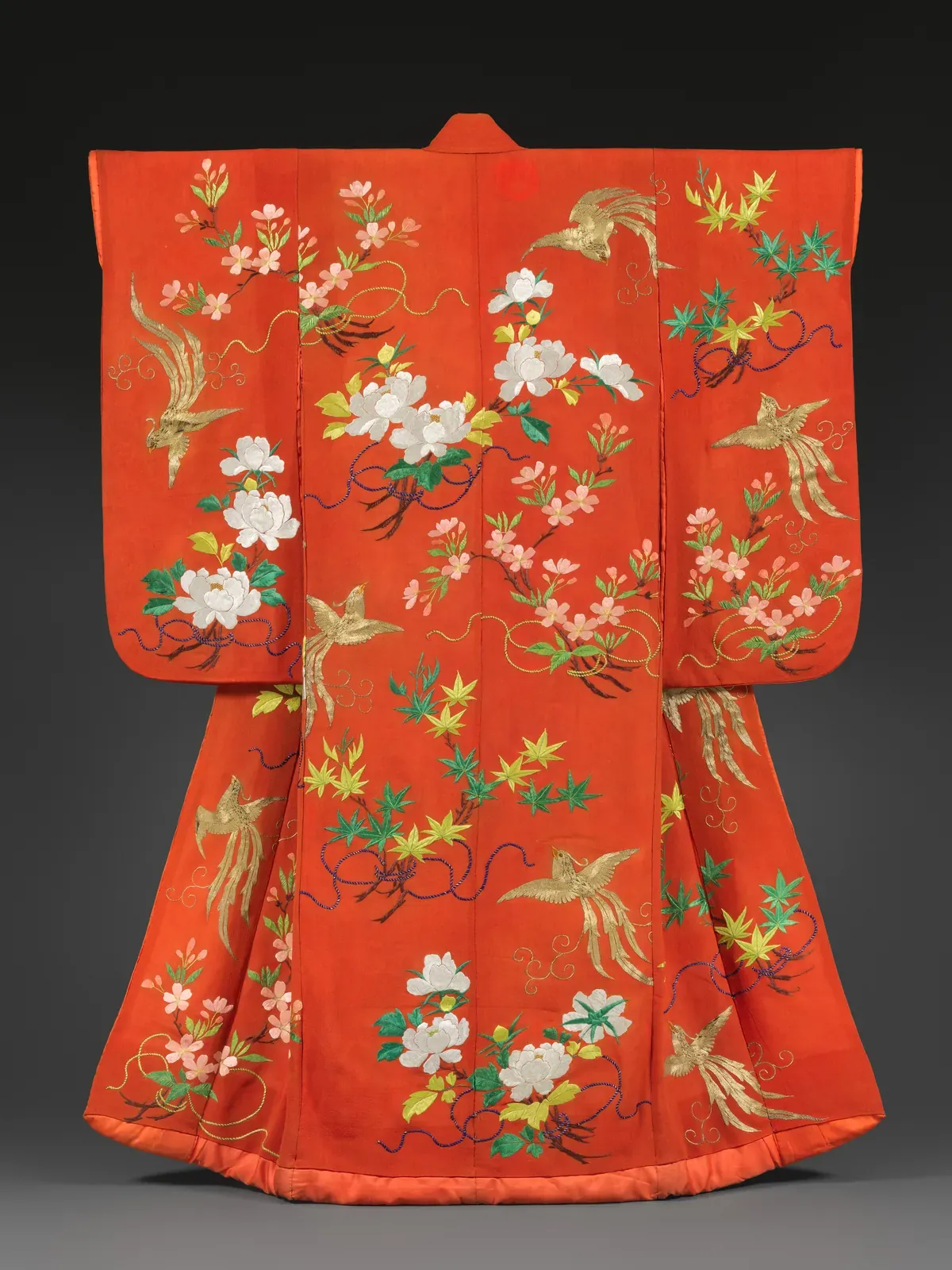
For other East Asian garments, see the hanbok and the kimono.