History
The word kimono means “thing to wear”. The garment grew out of the kosode, a robe with small sleeve openings that was first worn as an undergarment. By the Edo period (1603–1868) the kosode had become the main outer garment for men and women of all classes, and merchants, dyers and weavers developed the elaborate patterns that the kimono is known for.
From the Meiji era (1868–1912) onwards, Western clothing spread in Japan, first in the military and government and later in everyday life. Over the twentieth century the kimono moved from daily wear to clothing for ceremonies, celebrations and traditional arts such as the tea ceremony.
Main types of kimono
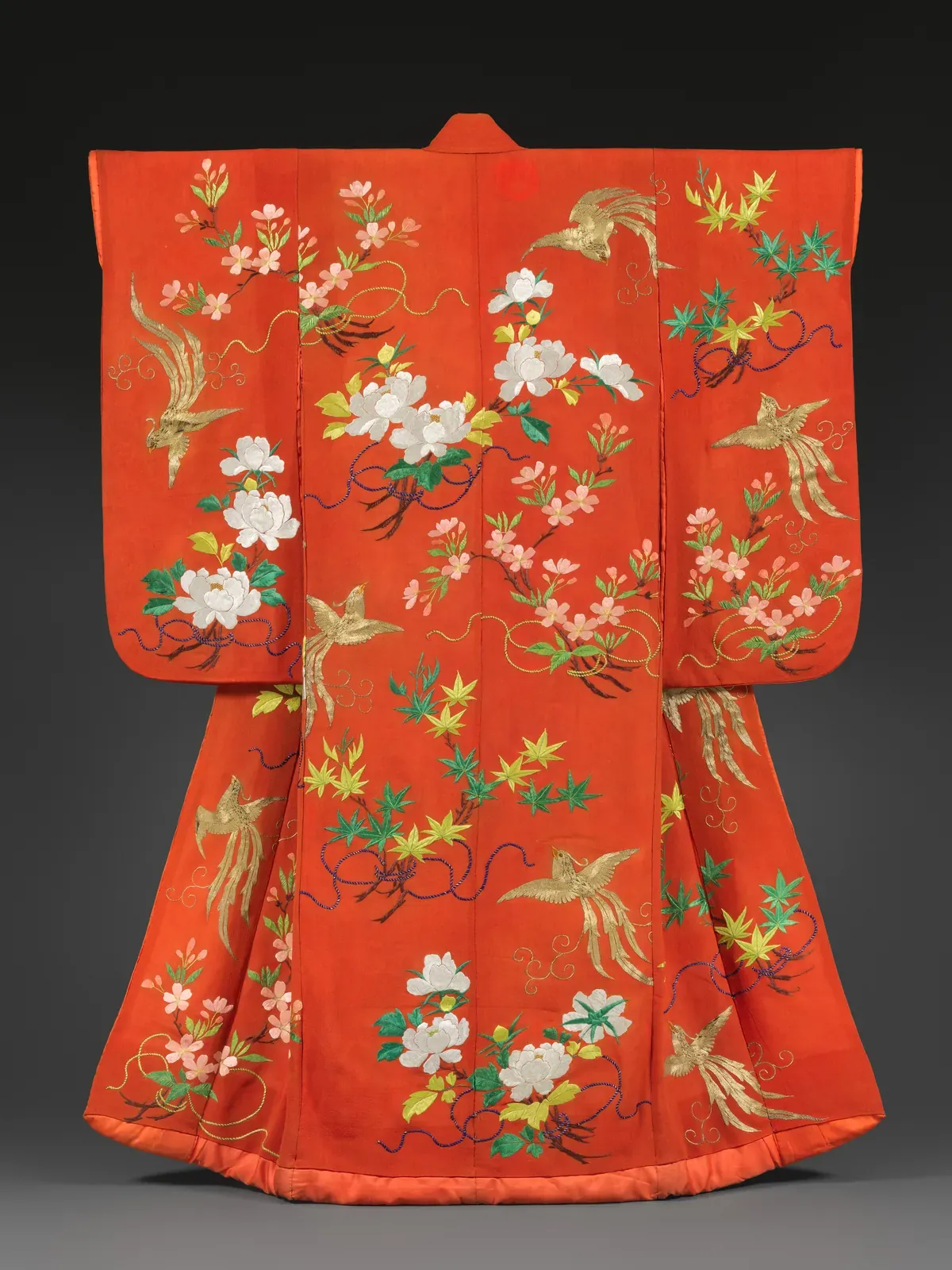
- Furisode: a kimono with long, swinging sleeves, the most formal kimono for young unmarried women. It is often worn on Coming of Age Day and at weddings. The robe in the photo above is a furisode.
- Tomesode: a formal kimono for married women, patterned only below the waist. The black version, kuro-tomesode, is worn by close female relatives at weddings.
- Hōmongi: a “visiting wear” kimono with patterns that flow across the seams, worn to parties and formal visits.
- Komon: a kimono with a small, repeating pattern all over, used for casual outings.
- Iromuji: a kimono in a single colour without a pattern, often worn to tea ceremonies.
- Yukata: an unlined cotton kimono for summer festivals, fireworks and hot-spring inns.
- Uchikake and shiromuku: bridal over-robes. The shiromuku is entirely white; the uchikake is often brightly coloured and heavily embroidered.
How it is worn
A kimono is worn over an under-robe called a nagajuban. The front panels are always wrapped left over right; the reverse is only used when dressing the deceased. The robe is adjusted to the wearer’s height by folding extra length at the waist (for women’s kimono), then held in place with cords and the obi, a wide sash tied at the back. Formal women’s obi can be several metres long and are tied in decorative knots.
Accessories complete the outfit: tabi (split-toe socks), zōri sandals or wooden geta, and for women, the obiage (a scarf tucked above the obi) and obijime (a cord tied around it). Men’s formal wear adds hakama trousers and a haori jacket with family crests.
Because putting on a formal kimono correctly is complex, many people learn it at a kimono-dressing school or book a professional dresser.
When it is worn today
Kimono are mainly worn for special occasions: weddings, graduation ceremonies (where many women wear hakama over a kimono), Coming of Age Day, New Year shrine visits, Shichi-Go-San celebrations for children, funerals and the tea ceremony. The yukata is the exception: it is still worn casually by many people every summer. See traditional clothing in Japan for the festivals where kimono and yukata are most often seen.